
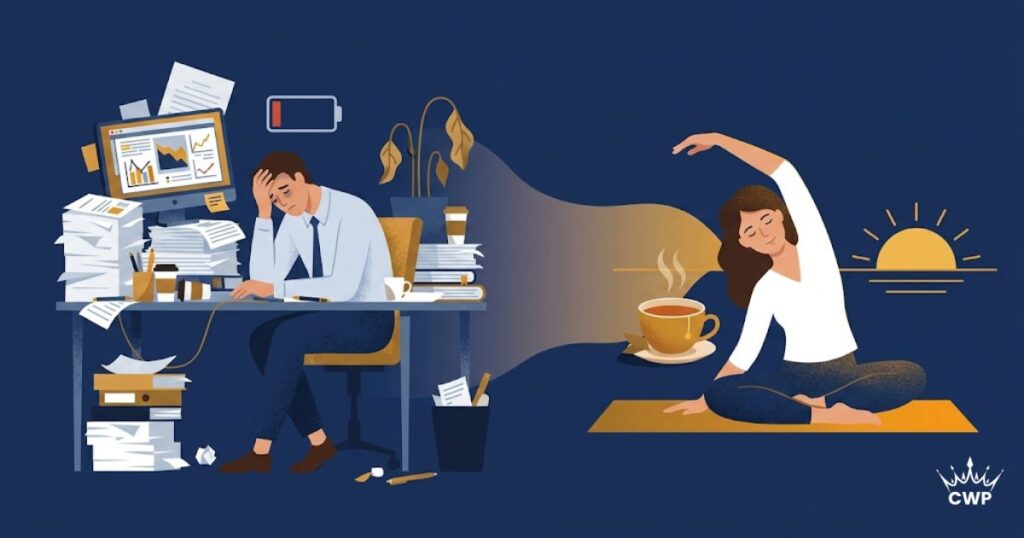
You wake up already tired. The work you once enjoyed feels pointless. Small tasks feel like mountains, and you’re irritable with people you care about. If this sounds familiar, you may be experiencing occupational burnout, and in India’s always-on work culture, you are far from alone. Long hours, blurred work-life boundaries, and constant connectivity have made burnout one of the defining health challenges for working professionals.
The good news: burnout is recognisable and reversible. This guide covers what burnout really is, how to spot it, and 10 proven strategies to recover and protect yourself going forward.
What is occupational burnout?
Occupational burnout is a state of physical, emotional, and mental exhaustion caused by prolonged workplace stress. The World Health Organization defines it by three signs: energy depletion and exhaustion, increased mental distance or cynicism about your job, and reduced professional effectiveness.
Burnout isn’t simply “being tired”, it builds over months of unmanaged stress until your capacity to cope runs out. Recognising it early is the key to recovering quickly.
Warning signs to watch for
- Constant fatigue that rest doesn’t fix
- Dreading work and feeling detached or cynical
- Reduced performance and difficulty concentrating
- Irritability, anxiety, or low mood
- Physical symptoms: headaches, disturbed sleep, frequent illness
10 proven strategies to beat burnout
1. Set firm work-life boundaries
Define clear start and stop times, and protect them. Turn off work notifications after hours. Boundaries aren’t laziness, they’re what make sustainable performance possible.
2. Take real breaks during the day
Short breaks every 90 minutes restore focus far better than powering through. Step away from the screen, stretch, or walk, micro-recovery prevents macro-collapse.
3. Prioritise sleep
Sleep is when your body and mind repair. Aim for 7-8 hours, keep a consistent schedule, and keep screens out of bed. Poor sleep both causes and worsens burnout.
4. Move your body daily
Exercise is one of the most effective stress regulators. Even 20 minutes of walking, yoga, or any movement releases tension and lifts mood. A short daily home yoga routine is an easy place to start.
5. Learn to say no
Overcommitment is a direct road to burnout. Saying no to non-essential tasks protects your energy for what matters. You cannot pour from an empty cup.
6. Reconnect with meaning
Cynicism fades when you reconnect with why your work matters. Identify the parts of your job you value and deliberately give them more attention.
7. Fix your workspace
A cramped, cluttered setup adds invisible daily stress. An ergonomic, calm workspace genuinely helps, see our guide to a healthy work-from-home setup.
8. Talk to someone
Isolation deepens burnout. Share how you feel with a trusted friend, family member, or your manager. Naming the problem is the first step to solving it.
9. Use your leave
Vacation and rest days exist for a reason. A genuine break, fully disconnected, resets your nervous system in a way weekends alone often can’t.
10. Seek professional help when needed
If self-help strategies aren’t enough, that’s not failure, it’s wisdom. A doctor or therapist can provide tools and support that make a real difference.
Conclusion
Burnout is your mind and body signalling that something needs to change, and that change is within your reach. Start with two strategies this week: protect your sleep and set one firm boundary. Recovery is gradual, but every small step rebuilds your energy and your enjoyment of work and life.
Frequently Asked Questions
How long does it take to recover from burnout?
It varies with severity, mild burnout can improve in a few weeks with rest and boundaries, while severe, long-standing burnout may take several months and professional support. The key is acting early rather than pushing through until you collapse.
What is the difference between burnout and depression?
Burnout is primarily work-related exhaustion that often eases with rest and change, while depression is a broader clinical condition affecting all areas of life. They can overlap and burnout can lead to depression, so if low mood persists beyond work, consult a professional.
Can I recover from burnout without quitting my job?
Yes, in most cases. Boundaries, rest, delegation, and reconnecting with meaning can resolve burnout without a job change. Quitting is sometimes right if the environment is genuinely toxic, but it’s not the only path, start with the strategies above.
Is burnout common in India?
Very. Long hours, high competition, always-on connectivity, and blurred work-life boundaries make burnout widespread among Indian professionals. Awareness is growing, and more people are recognising it and taking active steps to manage it.

1 Comment