
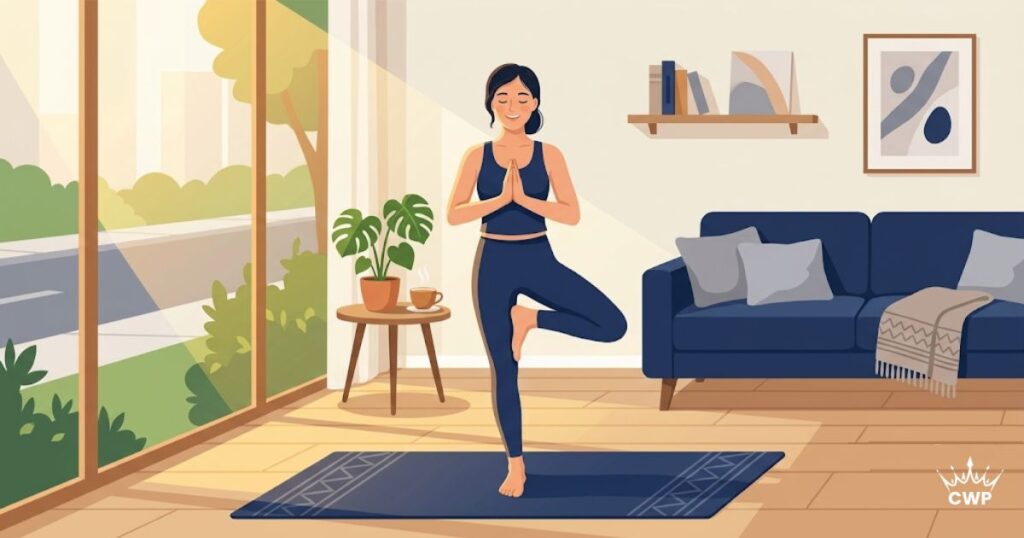
You don’t need a gym membership, an hour of free time, or years of experience to feel stronger, calmer, and more energetic. You need 15 minutes and a small patch of floor. For working professionals juggling deadlines, commutes, and screen fatigue, a short daily yoga routine at home is one of the most effective, and accessible, ways to protect both body and mind.
This guide gives you a simple, beginner-friendly 15-minute home yoga routine you can do every morning, plus the benefits and tips to keep it going.
Why 15 minutes of home yoga works
A short, consistent daily yoga practice improves flexibility, reduces stress, eases the stiffness of desk work, and boosts focus and energy, and doing it at home removes the biggest barrier, which is time. Consistency matters far more than duration: 15 minutes every day beats a 90-minute class once a month.
Regular practice also improves posture, sleep quality, and breathing, all of which working professionals commonly struggle with.
Your 15-minute morning routine
1. Centering & breathing (2 min)
Sit comfortably, close your eyes, and take slow deep breaths, inhale for 4 counts, exhale for 6. This calms the nervous system and sets your intention for the day.
2. Cat-Cow (2 min)
On all fours, alternate arching and rounding your spine with your breath. This gently warms up the spine and releases back tension from sitting.
3. Downward Dog (2 min)
Form an inverted V, pressing hands and heels down. It stretches the hamstrings, shoulders, and back, a full-body wake-up.
4. Surya Namaskar (5 min)
Flow through 3-5 rounds of Sun Salutations. This classic sequence works the entire body, builds warmth, and improves circulation. Move slowly and breathe with each movement.
5. Standing Forward Fold & Twist (2 min)
Fold forward to release the spine and hamstrings, then add a gentle seated or standing twist to aid digestion and spinal mobility.
6. Corpse Pose / Relaxation (2 min)
Lie flat, relax completely, and breathe naturally. This integrates the practice and leaves you calm and centered.
Benefits you’ll notice
- Less back, neck, and shoulder stiffness from desk work
- Lower stress and a calmer mind, a natural burnout buffer
- Better focus, energy, and mood through the day
- Improved posture, flexibility, and sleep over time
Tips to stay consistent
Keep your mat visible, practice at the same time each day, start with just what you can manage, and don’t chase perfection. Pair it with your broader wellbeing habits, a short practice like this is a powerful tool to beat occupational burnout.
Conclusion
Fifteen minutes of daily home yoga is a small investment with an outsized return, steadier energy, a calmer mind, and a body that feels good. Roll out your mat tomorrow morning, follow the routine above, and let consistency do the rest.
Frequently Asked Questions
Is 15 minutes of yoga a day enough?
Yes, for general wellbeing, flexibility, and stress relief, 15 minutes of consistent daily practice is genuinely effective. Consistency matters more than length, a short daily habit delivers better results than occasional long sessions.
What is the best time to do yoga at home?
Morning is ideal, it energises you, improves focus for the day, and is easier to keep consistent before the day gets busy. That said, the best time is whenever you’ll actually do it regularly; evening yoga is great for unwinding too.
Can beginners start yoga without a teacher?
Yes, beginners can safely start gentle routines like this at home. Move slowly, never force a pose, and stop if something hurts. If you have injuries or health conditions, consult a doctor or certified instructor first.
Do I need any equipment for home yoga?
Just a yoga mat and comfortable clothing to start. A mat provides grip and cushioning, but even a non-slip surface works initially. Props like blocks can help later, but they’re optional for this beginner routine.