
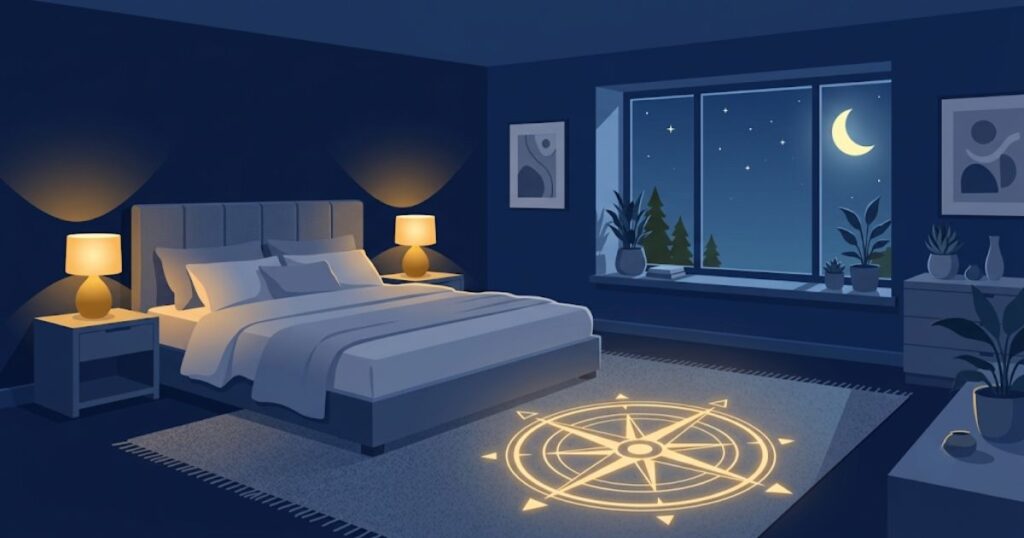
You spend a third of your life in one room. If your sleep is restless, your mornings heavy, or small misunderstandings with your partner keep piling up, Vastu Shastra says your bedroom itself might be quietly working against you. The bedroom is where your body repairs, your mind resets, and your relationship breathes, so its energy matters more than any other room in the house.
The beautiful part? Vastu for the bedroom is mostly about placement and direction, not construction. You do not need to break a single wall, most of the ten rules below can be applied this weekend by moving furniture, changing colors, or shifting a mirror.
These are the 10 most impactful bedroom Vastu rules for peaceful sleep, better health, and a stronger married life, plus quick remedies for problems you cannot physically change.
Why Does Bedroom Vastu Matter?
According to Vastu Shastra, every direction carries a distinct energy, and because the body spends 6-8 unconscious hours absorbing the bedroom’s energy every night, misalignments here affect sleep quality, health, and relationship harmony more than in any other room. Aligning the bedroom’s direction, bed position, and elements turns the room into a recovery zone instead of a stress amplifier.
Modern sleep science agrees on more than you might expect: clutter-free rooms, no screens, calming colors, and consistent bed orientation all measurably improve sleep. Vastu arrived at these prescriptions centuries earlier through the lens of energy, the wisdom converges.
What do the stars say about your day?
Read today’s free horoscope for your zodiac sign covering love, career, health, and lucky insights.
Read Your Daily Horoscope →The 10 Vastu Rules for Your Bedroom
Rule 1: Master Bedroom in the South-West
The south-west is ruled by the earth element, stability, strength, and authority. The master bedroom here grounds the head of the family and steadies the entire household. If your bedroom is elsewhere, do not panic: apply the remaining rules faithfully and add the remedies at the end.
Rule 2: Sleep with Your Head to the South (or East)
This is the single most important rule in bedroom Vastu. Sleeping with your head toward the south brings deep, restorative sleep and long-term health; east enhances memory and is excellent for students. Avoid sleeping with your head to the north. Vastu holds that it disturbs the body’s magnetic alignment, causing restless sleep and bad dreams.
Rule 3: Place the Bed Against a Solid Wall. Never Under a Beam
Your headboard should rest against a solid wall (not a window), giving the subconscious a feeling of support and protection. Equally important: never sleep directly under an exposed beam, which Vastu associates with pressure, headaches, and mental load. Leave space on both sides of a couple’s bed so both partners feel equal in the relationship.
Rule 4: No Mirror Facing the Bed
The most famous bedroom rule, and the one most often broken. A mirror (or reflective TV screen) facing the bed is believed to bounce energy back at the sleepers, causing disturbed sleep and, per tradition, friction and third-party interference in a marriage. Fix: shift the mirror, cover it with a cloth at night, or move it inside a wardrobe door.
Rule 5: Choose Warm, Earthy Colors
The bedroom should whisper, not shout. Vastu recommends earthy and soft tones, cream, beige, peach, soft pink, light brown, for calm and warmth in relationships. Avoid heavy use of black, deep blue, or fiery red on bedroom walls. Soft pink and peach are traditionally considered ideal for couples’ rooms.
Rule 6: Clear the Clutter. Especially Under the Bed
Stagnant energy loves clutter. Storing old junk, broken items, or shoes under the bed places dead weight directly beneath your resting body. Vastu links it to heaviness in sleep and lingering worries. Keep under-bed storage minimal and clean: fresh linens are fine; a graveyard of forgotten boxes is not.
Rule 7: Remove Electronics (or Power Them Down Fully)
Televisions, laptops, and phones bring active, restless energy into a space meant for surrender. Vastu advises no TV in the couple’s bedroom (its dark screen also acts as a mirror, see Rule 4). At minimum: screens off completely at night, phones charging away from the bed, Wi-Fi router in another room.
Rule 8: One Mattress for a Couple
A charming and specific rule for married couples: sleep on one single mattress, not two singles pushed together. The symbolic seam between two mattresses is said to create subtle separation between partners. Small gesture, meaningful intent, union in the very foundation of rest.
Rule 9: Soft Lighting, Fresh Air & Gentle Fragrance
Harsh white tube-light energy belongs in kitchens, not bedrooms. Use warm, dim lighting in the evening, ideally with a lamp in the south-east corner (the fire element’s home). Air the room daily, stale air is stale energy, and add calming fragrance: lavender, jasmine, or sandalwood before sleep.
Rule 10: Mind the Door and the Art on Your Walls
The bedroom door should open fully and silently, a creaking, blocked door is friction at the room’s very mouth. For artwork, choose imagery in pairs (two birds, a couple, paired elephants) to reinforce partnership, and avoid images of loneliness, violence, or turbulent water. Vastu also advises against water features and aquariums inside the bedroom, water’s restless element belongs elsewhere in the home, as we covered in our Vastu guide for the home office.
Quick Remedies When You Cannot Change the Room
Renting, or stuck with a north-east bedroom and an immovable wardrobe mirror? Vastu offers compensating remedies: cover mirrors at night, use a solid headboard to substitute for wall support, place a Himalayan salt lamp in the room’s heavy corner, switch bedsheets to warm earthy tones, and burn camphor or diffuse sandalwood weekly to reset the room’s energy.
Remedies work on the principle that small consistent corrections accumulate, exactly like the deep-cleaning reset many households do before the festive season, which we explore in our Diwali Vastu and cleaning guide.
Conclusion: Ten Rules, One Peaceful Room
Start with the two highest-impact changes tonight: head to the south, mirror away from the bed. Add one rule each week, colors, clutter, electronics, lighting, and within a month your bedroom becomes what it was always meant to be: the most restorative room in your home.
Every home is different, though, directions interact, and a rule that helps one bedroom may need adjusting in another. For a personalized room-by-room Vastu analysis of your home (done remotely from your floor plan, no visit required), book a consultation with AstroLogic Digital and sleep the way Vastu intended.
Frequently Asked Questions about Bedroom Vastu
Which direction should I sleep with my head in?
South is best, deep sleep, better health, and longevity according to Vastu. East is second-best and ideal for students and thinkers, enhancing memory and clarity. West is acceptable when the first two are impossible. Avoid north: it is traditionally linked to disturbed sleep and unsettling dreams.
What if my bedroom is not in the south-west?
Location is only one of ten rules, the others compensate substantially. Prioritize sleeping direction, bed placement, and mirror rules; add earthy colors and a salt lamp in the room’s south-west corner. A north-east bedroom (the trickiest placement for couples) benefits most from strict adherence to the remaining rules.
Why is a mirror facing the bed considered bad in Vastu?
Vastu holds that mirrors amplify and reflect energy; facing the bed, they bounce the sleepers’ energy back at them all night, causing restlessness, and tradition links a couple reflected in a mirror to intrusion and misunderstandings in the relationship. The fix is easy: relocate, angle away, or cover at night.
Which colors are best for a married couple’s bedroom?
Soft pink, peach, cream, and light earthy tones top the Vastu list for couples, they carry warmth, tenderness, and stability. Light green and sky blue suit rest as well. Avoid dominant black, grey, or aggressive red on walls; if you love red, use it in small accents like cushions rather than entire walls.
Can Vastu really improve sleep quality?
Many bedroom Vastu rules align remarkably well with modern sleep science: no screens, minimal clutter, calm colors, soft lighting, and fresh air are all evidence-backed sleep improvements. Whether you view it through energy or psychology, a Vastu-aligned bedroom creates the conditions deep sleep needs, most people notice the difference within weeks.

4 Comments