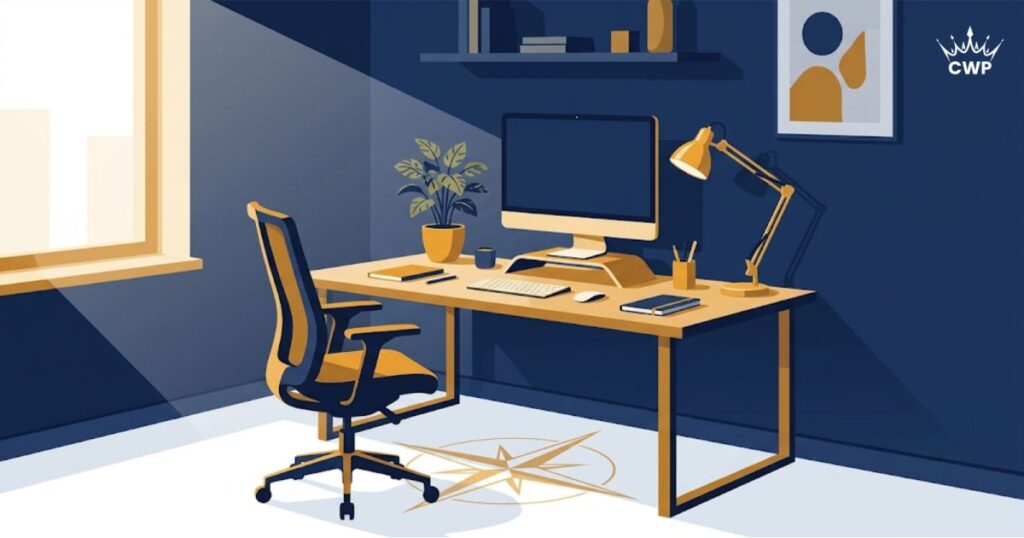
Working from home is no longer temporary, it’s a permanent part of how India works. But the dining table you set up “just for a few weeks” is quietly costing you: a stiff back, tired eyes, low focus, and stress. A thoughtful home office isn’t a luxury; it directly shapes your health, productivity, and even your peace of mind. This guide combines ergonomics with Vastu principles to help you build a workspace that supports both body and energy.
Why your work-from-home setup matters
A good home office setup reduces physical strain, sharpens focus, and creates a clear boundary between work and rest, which is essential for productivity and mental health. Poor setups cause back pain, eye strain, and burnout, while a well-designed one makes work easier and more sustainable.
The ergonomic essentials
Chair and posture
Invest in a supportive chair with lower-back support. Your feet should rest flat on the floor, knees at about 90°, and back upright. This single change prevents most work-from-home back pain.
Monitor position
The top of your screen should be at or just below eye level, about an arm’s length away. This keeps your neck neutral and reduces strain, use a laptop stand and external keyboard if needed.
Keyboard and mouse
Keep them at a height where your elbows stay at roughly 90° and wrists stay straight. An external keyboard and mouse are worth it if you work on a laptop all day.
Lighting
Good, glare-free lighting reduces eye strain. Natural light is best; add a desk lamp to avoid working in shadow, and position screens to avoid glare from windows.
Vastu tips for your home office
According to Vastu, the direction you face and the placement of your desk influence focus, energy, and prosperity. The most recommended arrangement is sitting facing north or east while working, with a solid wall behind you for support.
- Direction: face north or east while working for focus and positive energy.
- Desk placement: ideally in the south-west or west of the room, with a solid wall behind your back, never sit with your back to a door or window.
- Clutter: keep the workspace clean and organised; clutter blocks positive energy and focus.
- Colours & plants: light, soothing colours and a small plant invite calm, positive energy.
We cover the full principles in our Vastu tips for home office guide.
Small additions that make a big difference
A footrest, a document holder, noise-cancelling headphones, and a dedicated “work zone” (even a corner) all sharpen focus and comfort. Most importantly, keep work and rest spaces separate, your bed is not a desk.
Conclusion
A great work-from-home setup blends ergonomics (for your body) with Vastu (for your energy and focus): a supportive chair, an eye-level screen, good lighting, and a well-placed, clutter-free desk facing north or east. Small, deliberate changes create a workspace that keeps you healthy, focused, and productive for the long run. Protecting your setup is also a smart way to prevent burnout.
Frequently Asked Questions
Which direction should I face while working from home?
According to Vastu, facing north or east while working is most beneficial for focus, energy, and prosperity, with a solid wall behind you for support. These directions are also practical, letting you position screens to avoid glare.
What is the most important ergonomic change for a home office?
A supportive chair and correct posture, feet flat, knees at 90°, back upright with lumbar support, prevents most work-from-home back pain. Combined with an eye-level monitor, it addresses the two biggest sources of strain.
Can I set up a Vastu-friendly office in a small space?
Yes. Even in a small room or corner, you can face north or east, keep a solid wall behind you, stay clutter-free, and add light colours and a small plant. Vastu is about direction and order, not room size.
Is it bad to work from bed?
Yes, working from bed harms posture and blurs the boundary between work and rest, hurting both productivity and sleep. Even a small dedicated desk area is far better for your body, focus, and mental separation between work and relaxation.