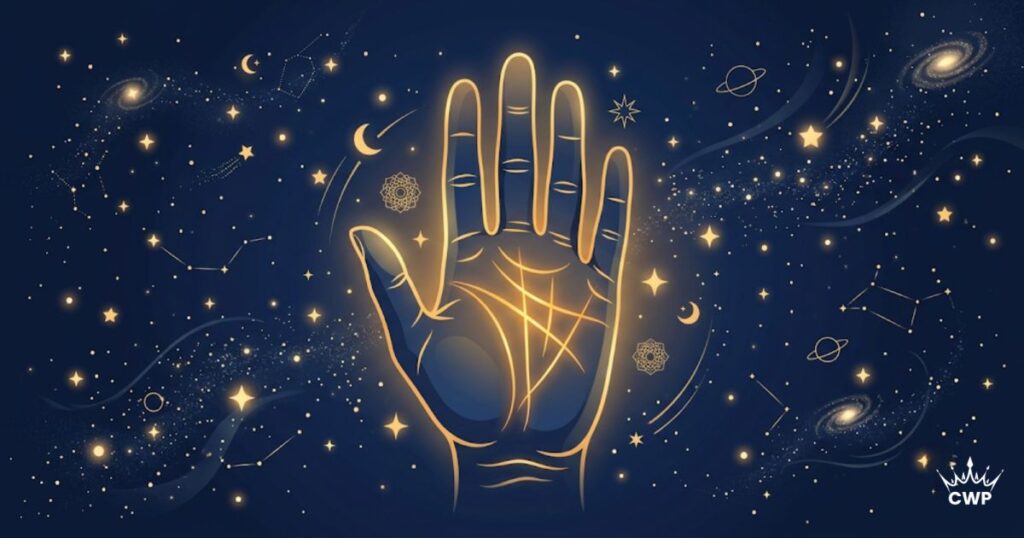
For thousands of years, people have looked at the lines on their palms and wondered what they reveal. Palmistry, known as Hast Rekha Shastra in India, is the ancient art of reading the hand to understand personality, tendencies, and life patterns. While it should be approached with an open, thoughtful mind, palmistry remains a fascinating window into self-reflection. This beginner’s guide explains the major palm lines and what they mean.
What is palmistry?
Palmistry is the practice of interpreting the lines, mounts, and shapes of the hand to gain insight into a person’s character and life tendencies. The three major lines read in palmistry are the Heart Line, the Head Line, and the Life Line, each associated with a different aspect of life.
Traditionally, the dominant (active) hand is read for your present and future tendencies, while the passive hand reflects your inherent nature and potential.
The three major palm lines
1. The Heart Line (emotions & relationships)
Running across the top of the palm below the fingers, the Heart Line relates to emotions, love, and relationships. A long, clear line suggests warmth and emotional openness; a short or faint line may indicate a more guarded or practical approach to feelings. Curves and branches add nuance about how one expresses love.
2. The Head Line (intellect & thinking)
Running horizontally across the middle of the palm, the Head Line relates to intellect, thinking style, and decision-making. A long line suggests thoughtful, analytical thinking; a shorter line, a more direct and practical mind. A deep, clear line indicates strong focus and mental clarity.
3. The Life Line (vitality & life path)
Curving around the base of the thumb, the Life Line relates to vitality, energy, and life changes, not, as commonly misbelieved, the length of your life. A long, deep line suggests strong energy and resilience; its curves and branches reflect major life shifts and vitality, not a countdown.
Other lines and features
- Fate Line: running vertically up the palm, associated with career, life direction, and external influences. Not everyone has a prominent one.
- Sun Line (Apollo): linked to success, creativity, and recognition.
- Marriage Lines: small lines below the little finger, traditionally associated with significant relationships.
- Mounts: the fleshy pads at the base of each finger, each linked to a planet and its qualities.
How to read a palm (the basics)
Start by observing the overall hand shape and which lines are deepest and clearest, prominent lines carry more weight. Read the three major lines first, note their length, depth, and any breaks or branches, then consider the mounts and minor lines. Remember: palmistry looks at tendencies and patterns, always read in combination, never one line in isolation.
Conclusion
Palmistry is a fascinating tool for reflection and self-understanding, rooted in centuries of tradition. Read your Heart, Head, and Life lines as insights into your emotional, intellectual, and vital nature, but always as guidance, never as fixed fate. The lines suggest tendencies; your choices write the story.
Curious about a deeper, personalised reading combining palmistry with your birth chart and numerology? Book a consultation with AstroLogic Digital. You may also enjoy exploring your numerology life path number.
Frequently Asked Questions
Which hand should be read in palmistry?
Traditionally, the dominant (active) hand, the one you write with, is read for your present and future tendencies, while the non-dominant hand reflects your inherent nature and potential. Many readers compare both hands to understand how you’ve developed from your natural traits.
Does the Life Line show how long I will live?
No, this is the most common palmistry myth. The Life Line relates to vitality, energy, and major life changes, not lifespan. A short Life Line does not mean a short life. It reflects the quality and shifts of your life force, not its duration.
Can palmistry predict the future?
Palmistry is best understood as a tool for insight into personality and tendencies, not a precise prediction of future events. Traditional belief holds that lines can shift over time as you grow, which itself suggests your choices, not fixed fate, shape your path.
What are the three main lines in palmistry?
The three major lines are the Heart Line (emotions and relationships), the Head Line (intellect and thinking), and the Life Line (vitality and life changes). These are read first and form the foundation of any palm reading, always interpreted together rather than in isolation.